Energy to the people and go to future together
파트너소개
임펄싱 와인딩 테스터
임펄싱 와인딩 테스터
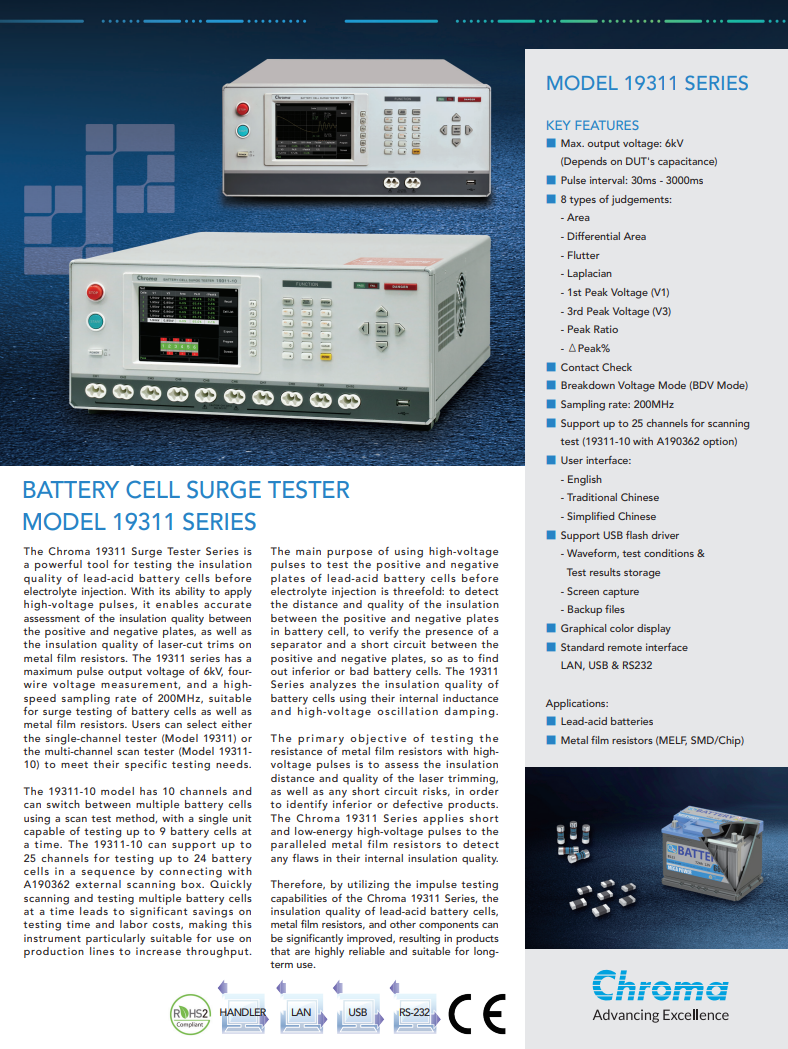
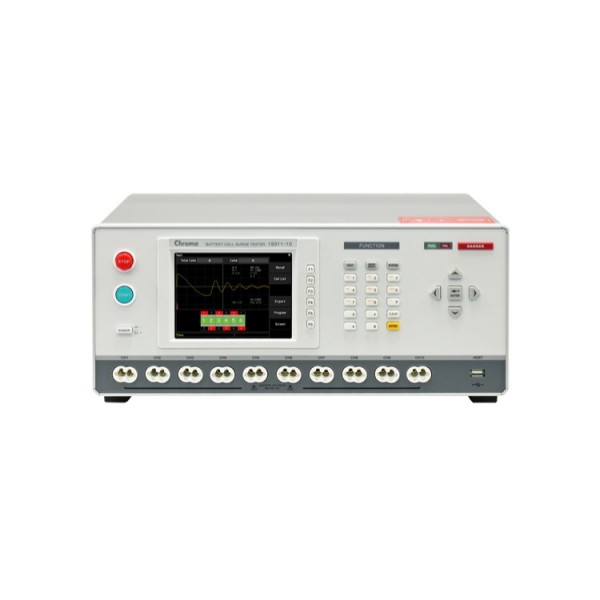
배터리 셀 서지 테스터 Model 19311 Series
펄스 간격: 30ms ~ 3000ms
8가지 판정 유형:
구역
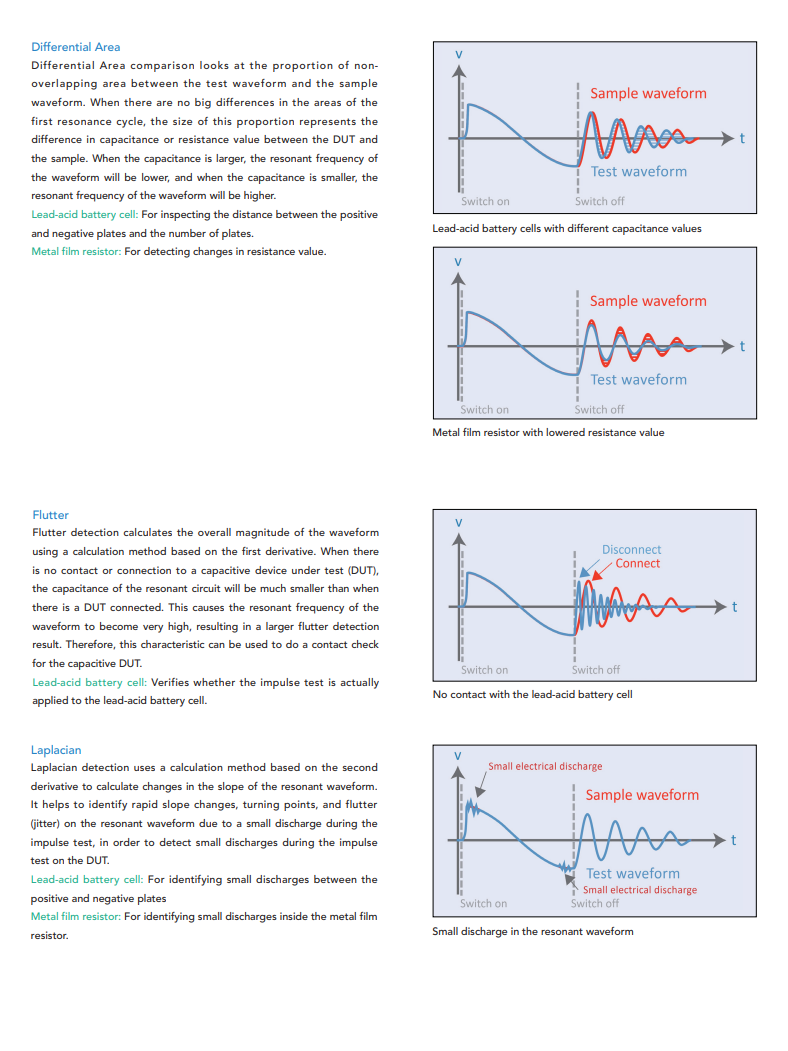
차등 구역
플러터
라플라시안
1차 피크 전압(V1)
3 차 피크 전압(V3)
피크율
Δ피크%
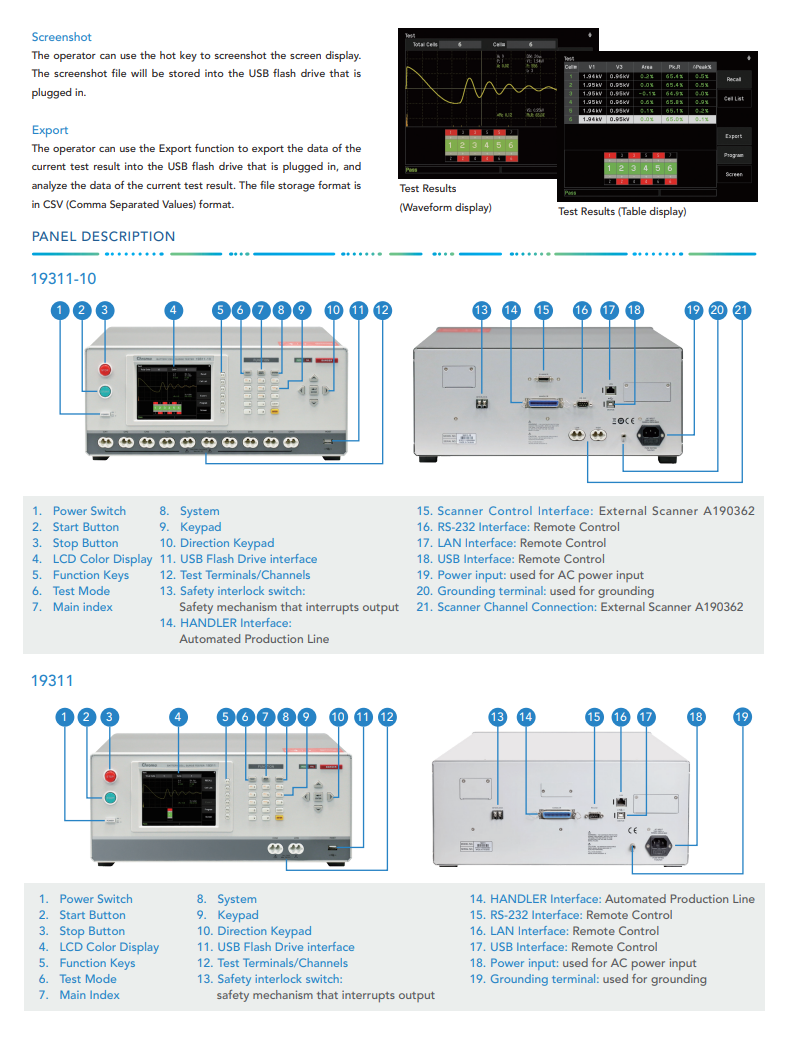
접점 체크
파괴 전압 모드(BDV 모드)
샘플링 속도: 200MHz
스캔 테스트를 위해 최대 25개의 채널 지원(A190362 옵션이 있는 19311-10)
사용자 인터페이스:
영어
중국어 번체
중국어 간체
USB 플래시 드라이버 지원
파형, 테스트 조건 및 테스트 결과 저장
화면 캡처
파일 백업
그래픽 색상 디스플레이
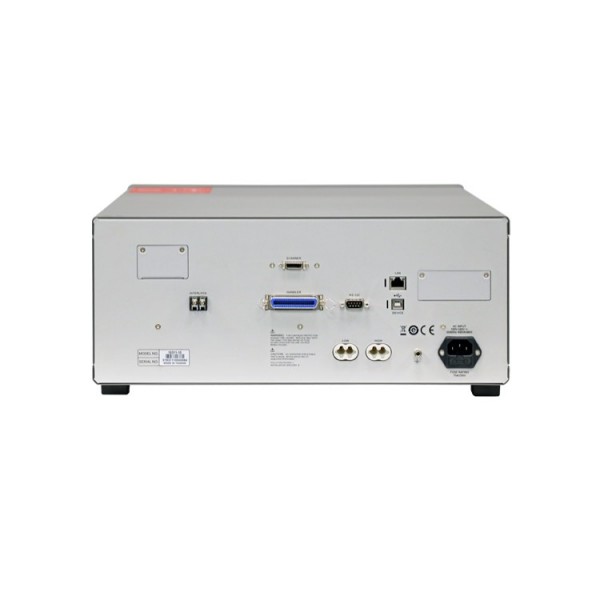
표준 원격 인터페이스: LAN, USB & RS232
· 제조사 : Chroma
· 원산지 : 대만
· 모델명 : 배터리 셀 서지 테스터 Model 19311 Series
제품 상세 정보
The Chroma 19311 Surge Tester Series is a powerful tool for testing the insulation quality of lead-acid battery cells before electrolyte injection. With its ability to apply high-voltage pulses, it enables accurate assessment of the insulation quality between the positive and negative plates, as well as the insulation quality of laser-cut trims on metal film resistors. The 19311 series has a maximum pulse output voltage of 6kV, fourwire voltage measurement, and a highspeed sampling rate of 200MHz, suitable for surge testing of battery cells as well as metal film resistors. Users can select either the single-channel tester (Model 19311) or the multi-channel scan tester (Model 19311-10) to meet their specific testing needs.
The 19311-10 model has 10 channels and can switch between multiple battery cells using a scan test method, with a single unit capable of testing up to 9 battery cells at a time. The 19311-10 can support up to 25 channels for testing up to 24 battery cells in a sequence by connecting with A190362 external scanning box. Quickly scanning and testing multiple battery cells at a time leads to significant savings on testing time and labor costs, making this instrument particularly suitable for use on production lines to increase throughput.
The main purpose of using high-voltage pulses to test the positive and negative plates of lead-acid battery cells before electrolyte injection is threefold: to detect the distance and quality of the insulation between the positive and negative plates in battery cell, to verify the presence of a separator and a short circuit between the positive and negative plates, so as to find out inferior or bad battery cells. The 19311 Series analyzes the insulation quality of battery cells using their internal inductance and high-voltage osci l lation damping.
The primary objective of testing the resistance of metal film resistors with highvoltage pulses is to assess the insulation distance and quality of the laser trimming, as well as any short circuit risks, in order to identify inferior or defective products. The Chroma 19311 Series applies short and low-energy high-voltage pulses to the paralleled metal film resistors to detect any flaws in their internal insulation quality.
Therefore, by utilizing the impulse testing capabilities of the Chroma 19311 Series, the insulation quality of lead-acid battery cells, metal film resistors, and other components can be significantly improved, resulting in products that are highly reliable and suitable for longterm use.

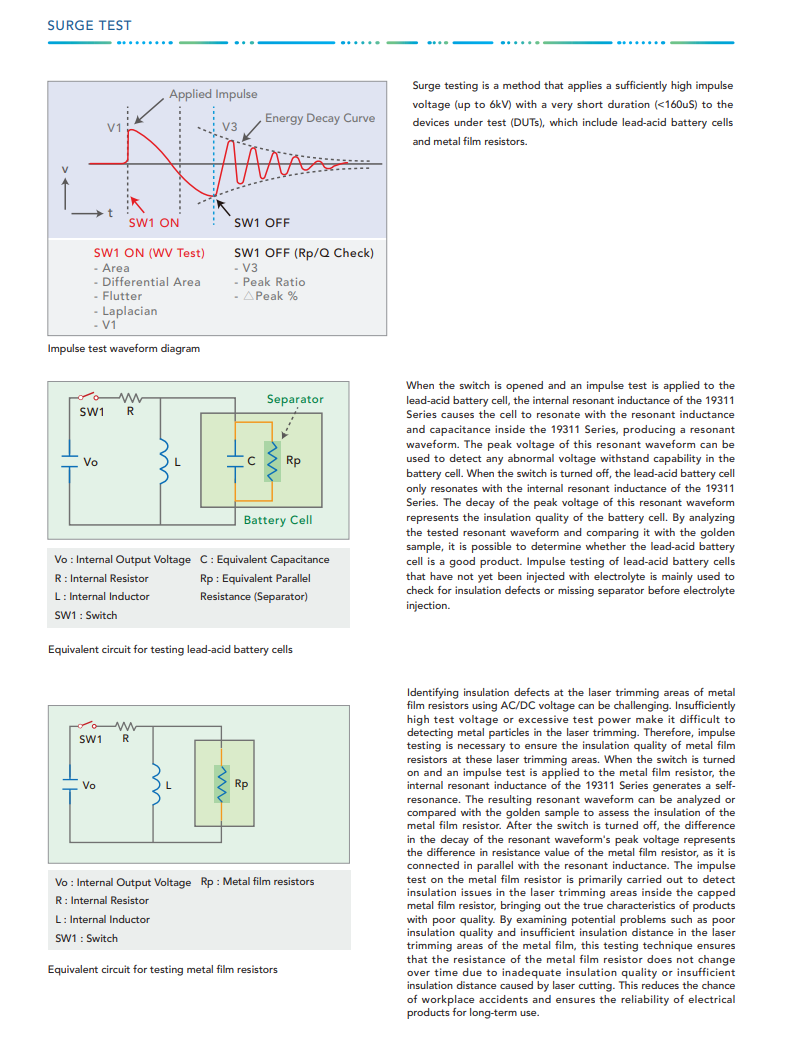
▲ Impulse test waveform diagram
Surge testing is a method that applies a sufficiently high impulse voltage (up to 6kV) with a very short duration (<160uS) to the devices under test (DUTs), which include lead-acid battery cells and metal film resistors.
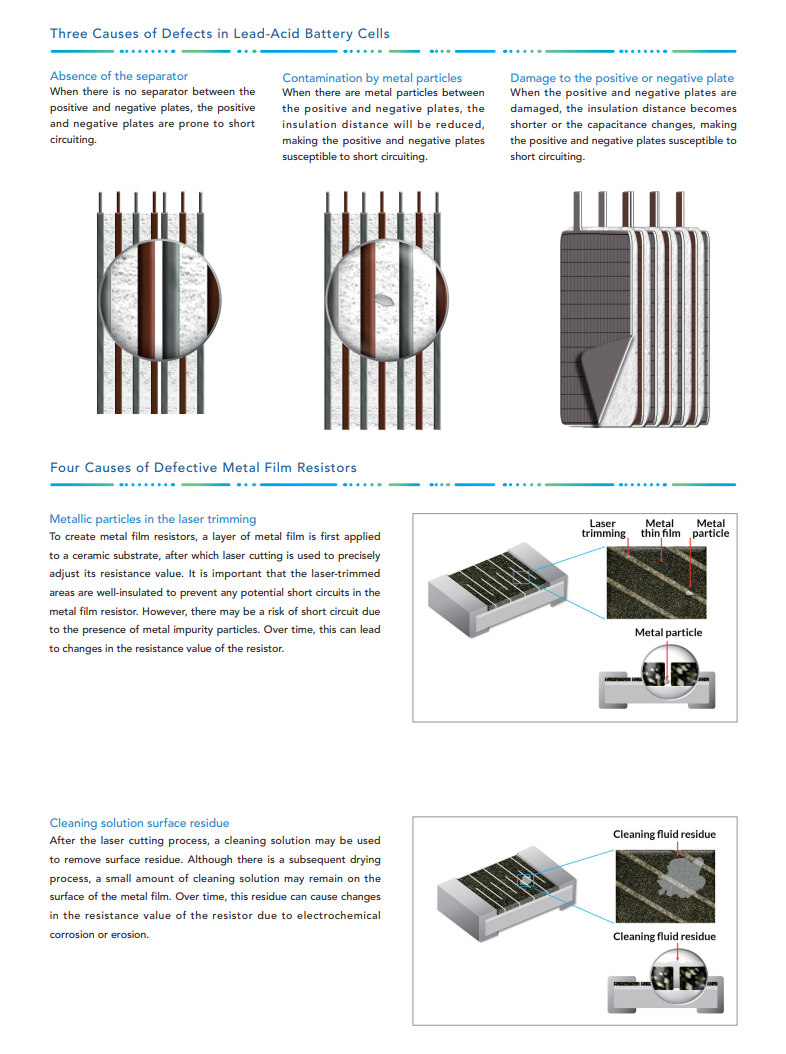
When the switch is opened and an impulse test is applied to the lead-acid battery cell, the internal resonant inductance of the 19311 Series causes the cell to resonate with the resonant inductance and capacitance inside the 19311 Series, producing a resonant waveform. The peak voltage of this resonant waveform can be used to detect any abnormal voltage withstand capability in the battery cell. When the switch is turned off, the lead-acid battery cell only resonates with the internal resonant inductance of the 19311 Series. The decay of the peak voltage of this resonant waveform represents the insulation quality of the battery cell. By analyzing the tested resonant waveform and comparing it with the golden sample, it is possible to determine whether the lead-acid battery cell is a good product. Impulse testing of lead-acid battery cells that have not yet been injected with electrolyte is mainly used to check for insulation defects or missing separator before electrolyte injection.

▲ Equivalent circuit for testing lead-acid battery cells

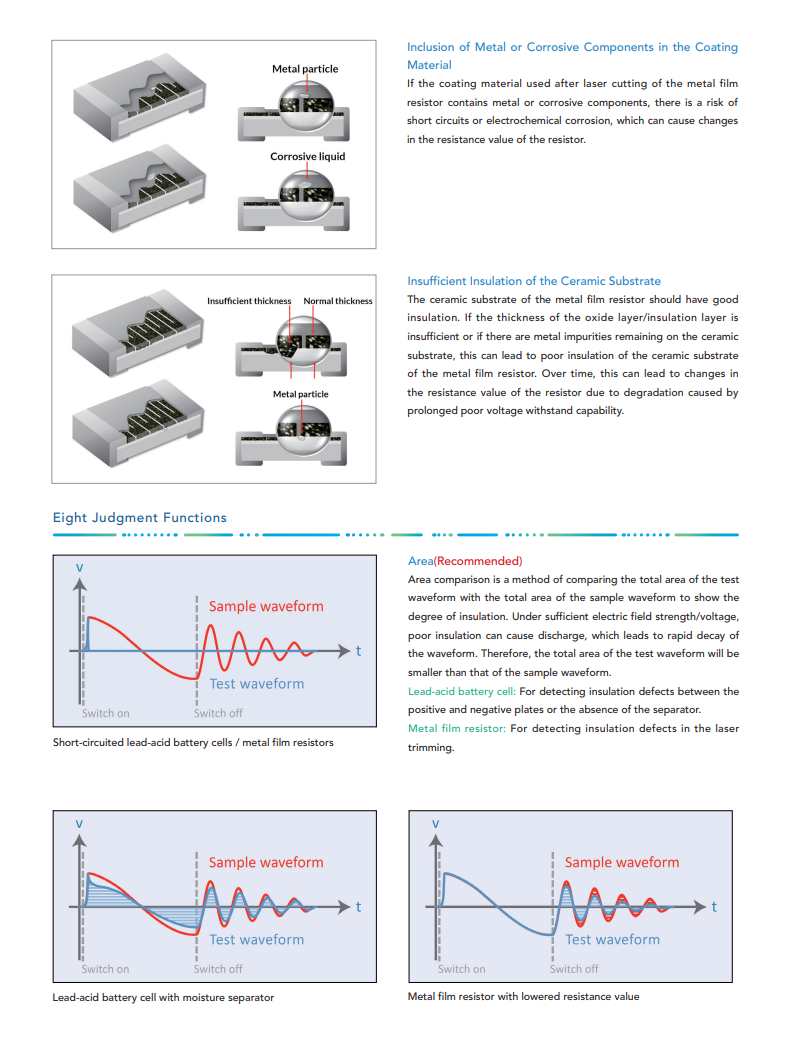
▲ Equivalent circuit for testing metal film resistors
Identifying insulation defects at the laser trimming areas of metal film resistors using AC/DC voltage can be challenging. Insufficiently high test voltage or excessive test power make it difficult to detecting metal particles in the laser trimming. Therefore, impulse testing is necessary to ensure the insulation quality of metal film resistors at these laser trimming areas. When the switch is turned on and an impulse test is applied to the metal film resistor, the internal resonant inductance of the 19311 Series generates a selfresonance. The resulting resonant waveform can be analyzed or compared with the golden sample to assess the insulation of the metal film resistor. After the switch is turned off, the difference in the decay of the resonant waveform's peak voltage represents the difference in resistance value of the metal film resistor, as it is connected in parallel with the resonant inductance. The impulse test on the metal film resistor is primarily carried out to detect insulation issues in the laser trimming areas inside the capped metal film resistor, bringing out the true characteristics of products with poor quality. By examining potential problems such as poor insulation quality and insufficient insulation distance in the laser trimming areas of the metal film, this testing technique ensures that the resistance of the metal film resistor does not change over time due to inadequate insulation quality or insufficient insulation distance caused by laser cutting. This reduces the chance of workplace accidents and ensures the reliability of electrical products for long-term use.